Custom AI agents for your business. From information to proposed action.

I build AI agents that help analyse information, draft responses and identify issues that need attention. I connect them to agreed data sources and business tools. Together, we define what the agent can do independently and what needs your approval.

Start with one task you currently handle manually: comparing listings, reviewing inventory or preparing a customer response. I will shape the solution around that task.

Tell me about your workflow

Explore project examples

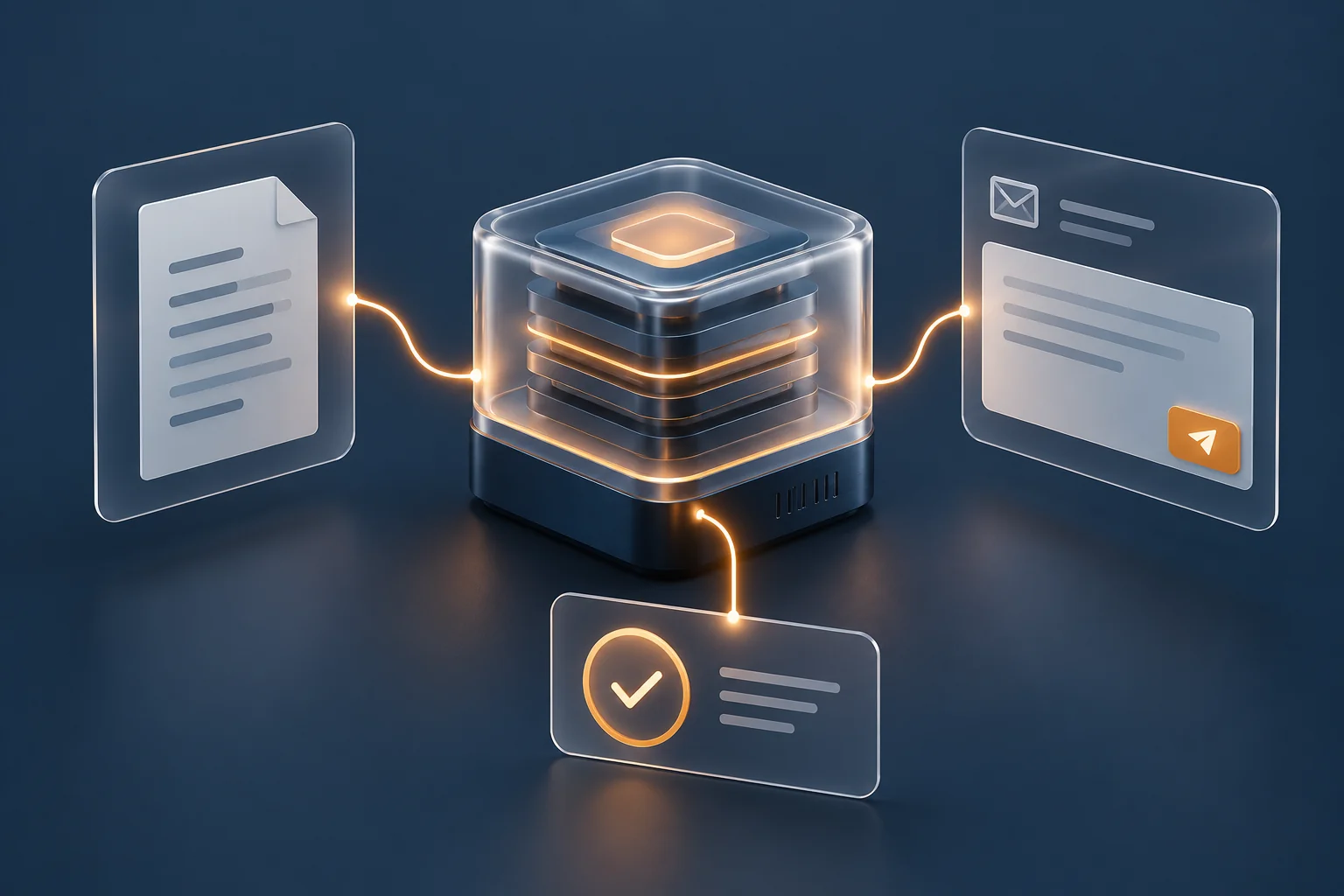
Illustration of an AI agent workflow
Concept illustration — not a client system

What can an AI agent do for your business?

An AI agent is software that uses an AI model, together with the information and tools made available to it, to carry out a defined task. It might prepare an analysis, identify missing information or suggest a next step. Access to an AI model does not, by itself, authorise the agent to send messages, change prices or place orders.

The following examples illustrate possible project scopes. I check data availability, integrations and approval requirements before preparing a quote.

Drafting customer responses

You provide a question and the materials the agent should consult, such as service information, instructions or answers to common questions. The agent prepares a draft with references to its sources. You review the response before sending it.

For example, a customer asks how two services differ. The agent compares the information in your offer and flags any missing detail for clarification. Connecting an inbox or CRM is a separate scope; you can start by entering questions manually.

Reviewing listings and products

An agent can compare information from agreed sources and organise discrepancies for review. Results can include a source link, the date checked and an explanation of why a listing needs attention.

For example, a product is in stock but its listing cannot be purchased. The immediate task is to investigate the listing issue before considering promotion. If costs are missing, the agent should flag that gap rather than present an incomplete profitability assessment as a reliable conclusion.

Supporting inventory decisions

Calculation rules can identify products at risk of running out or carrying excess stock. AI can help explain selected cases and prepare a recommendation for review.

For example, a change in sales pace means an existing reorder date needs reassessment. You receive a proposal to compare with your delivery plan. In my AI Inventory Monitor project, the user remains responsible for placing purchase orders.

Planning marketing activity

An agent can turn sales and competitor analysis into suggested topics, briefs and a proposed action plan. Separate roles can handle different tasks, with their findings brought together in one place.

For example, before preparing a campaign, you want to assess which products to include and what information is still missing. The agent prepares the material for that decision. Publishing content and launching advertising require separately agreed permissions and approval.

Reporting and reviewing exceptions

A system collects data and runs defined calculations, while AI can help explain changes or selected issues. There is no need to send every record to a model or repeatedly analyse a situation that has not changed.

For example, a report identifies missing delivery costs for some orders. That gap should be visible before anyone evaluates the result. Combining data and calculating a report may only require conventional automation; I add AI when it has a specific purpose.

Examples from my portfolio

AI Marketing Centre

I built a centre with six agent roles that brings together competitor, sales and content analysis to prepare proposed actions. A Marketing Manager role organises the findings, while a shared interface holds plans, briefs, PDF reports, a calendar and approvals.

Analyses are started manually. The owner retains control over budgets and publication. Financial recommendations that depend on missing profitability data are blocked until the necessary information is available.

Explore the AI Marketing Centre

Amazon agents

I combined listing, inventory, cost and advertising analysis with rules for selecting products for further review. A Manager role coordinates specialist findings, while rules check data quality, limits and conflicts between proposals.

The deployed returns agent supports checking a return request and preparing a GLS label after human approval. Issuing a refund remains a separate decision. This project shows how AI analysis can work alongside calculation rules and controls over execution.

Explore the Amazon agents project

AI Inventory Monitor

I built a monitor that calculates product inventory conditions locally and sends new or materially changed cases to AI. It includes prioritisation, a cap on the number of analyses, model usage records and a cost limit.

The report supports purchasing decisions; the module does not place orders on the user's behalf. Its AI functionality requires active access to a model.

Explore the AI Inventory Monitor

These descriptions explain the scope of my work. Client brands are withheld at their request, and illustrations show the scope of each solution. They do not provide public access to client systems.

Which tools can an agent connect to?

The starting point might be documents and spreadsheets, an online store, an ERP or CRM system, an email inbox or marketplace data. Before confirming an integration, I check the available API, permissions, data quality and restrictions of the specific application. Not every tool provides the same capabilities.

We also agree which system is the authoritative source for information such as stock levels, and what should happen if a connection fails or data is outdated. Reading information and writing changes require separate permissions.

Depending on the project scope, you can use the agent through a dedicated interface or Discord. The ActiveAI client portal serves a different purpose: exchanging project materials, feedback and implementation details.

Explore system integration services

Control over data and actions

Before development starts, we agree on:

  • The data sources and permissions required for the task.
  • Work limited to reading information and preparing proposals.
  • Actions that need approval, such as sending a message or changing a listing.
  • What happens when data is missing, a connection fails or a result is ambiguous.
  • The required execution history, usage limits and a way to stop the process.

AI models can make mistakes. Tests therefore include situations in which the agent should ask for clarification or stop. Before launch, we agree what data may be sent to the model provider and any storage requirements. Do not submit passwords, API keys or confidential materials through the contact form.

How does implementation work?

Define the task and expected result

You describe the current workflow, tools and problem. Together, we choose an initial scope and acceptance criteria: what information the output must contain and which actions are permitted.

Test an initial version

I prepare an initial version using agreed materials. We review typical tasks and exceptions, such as a missing document, conflicting information or an incomplete cost record. This helps assess usefulness before extending the solution.

Connect tools and test the workflow

I connect the agreed tools and test the full workflow, including a rejected proposal and a failed connection. If the project includes writing changes, we test those actions within a controlled scope.

Handover and ongoing support

You receive the agreed solution, instructions and a walkthrough. The proposal sets out the terms for fixes, support, knowledge updates and further development. You do not need to commission a large multi-agent system to get started.

See how the agent panel works.

An example of an agent with a panel and defined responsibilities. You select competitors and what you're looking for: ads, new products, or both. The agent checks the previously defined websites or data and displays the results.

Concept demonstration with fictional data and synthetic English narration. Use full screen to inspect the panel on a phone.

Read the video transcript

This agent has a panel and an agreed task. Choose the competitors you want to review from the list prepared during setup.

Next, choose ads, new products, or both categories. These options define what the agent will look for in this scan.

Review your selection and start the scan. I configure the sources, model connection and operating rules during implementation.

The agent checks the agreed sources for your selected competitors. It looks for the categories you chose and flags unavailable sources.

The panel shows the ads and new products found. Each result identifies the competitor, source and date checked.

Open a finding, read the summary and check the source. The agent gathers information. You make the business decisions.

Results stay in the panel history. For your next scan, select the competitors and categories you want to review.

This illustrates an agent with a specific task and a simple panel. Let's discuss an implementation for your business.

Pay for actual hours — up to an agreed cap

EUR 35 net per hour

Before work starts, I agree the scope, hourly rate and maximum billable hours with you. If I finish sooner, you pay less. If the agreed scope takes longer, I absorb the extra time.

  • Agreed cap: 10 hours. Completed in 6 hours: you pay for 6 hours — EUR 210 net.
  • Agreed cap: 10 hours. Completed in 12 hours: you pay for 10 hours — EUR 350 net.

Additional tasks outside the agreed scope require a separate quote and your approval before I start them. Extra time needed to complete the original scope does not increase your bill.

You receive a summary of the time worked. The cap covers my fee for the agreed scope. AI usage, hosting, hardware and paid tools are separate costs, which I explain and agree with you before purchase or activation.

Discuss scope and budget

Questions before you start

Do I need an AI agent or conventional automation?

If a task follows fixed rules, a script or integration may be enough. AI is worth considering when the work involves interpreting content or preparing proposals from different sources. I choose the approach around the task you want to improve.

Will the agent send messages and change data on its own?

Only where that scope has been agreed and tested. We can start with reading data and preparing proposals for approval. Drafting a response is separate from sending it.

Does all my data need to be organised first?

A description of the workflow and an example of the desired result are enough for an initial discussion. Before implementation, I review the required sources. If information is incomplete or inconsistent, we first identify what needs to be organised.

Can an agent work while my computer is switched off?

A server-based version can run independently of your computer while the server and required services are available. A local version needs the device to be running. Whether tasks are started manually or on a schedule is part of the agreed scope.

Can I start with a single process?

Yes. The initial scope can cover one type of question, report or check. Further development can follow once the results and practical usefulness have been reviewed.

Tell me which task you want to improve

Describe what you currently do manually, how often, which applications you use and the result you need. Tell me which decisions should remain yours. You do not need to choose an AI model or know the technical terminology — I will help define the scope and prepare a quote.

Discuss your workflow with me

Further reading: What is an AI agent? · Business automation · Custom software