
Inventory forecasting
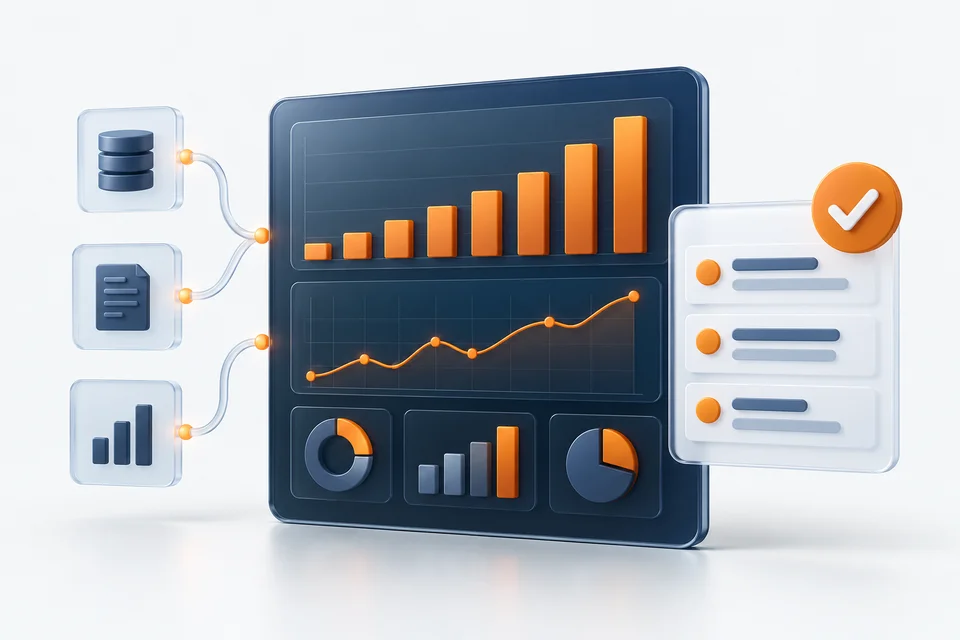
I've combined sales history, inventory levels, and deliveries into an inventory forecast. The dashboard indicates the risk of stockouts and the suggested order quantity.
When should you reorder, and how many units should you buy?
I built an inventory planning module that combines sales history, available goods, and in-transit deliveries. I developed the ERP data flow via Metabase, calculations, and a dashboard with charts. Users can move from a product overview to assessing specific out-of-stock risk.
Stock expressed as days of sales
The module uses average daily sales to estimate how many days the current inventory will last. This allows a similar number of units to receive different ratings for a product that sells quickly or slowly. When sales rates don't allow for coverage calculations, the result remains unavailable instead of suggesting a seemingly accurate deadline.
Reorder point
I've prepared a calculation of the threshold at which the next delivery should be considered. This calculation takes into account the expected sales during the waiting period and a safety stock. The buffer can be based on the specified number of units or the number of days of sales. The calculation also takes into account a higher threshold provided by the data source.
Suggested quantity including deliveries
The target inventory includes delivery time, the period until the next purchase review, and a safety buffer. From this amount, available and in-transit items are subtracted. The result indicates the missing quantity to order; if there is sufficient inventory, the recommendation does not drop below zero.
Chart and goods arrival dates
I combined the forecast with information about upcoming deliveries: dates and quantities assigned to the product. This view allows you to compare the rate of stock depletion with the planned replenishment. This helps you assess whether the delivery meets your needs and which products require prior checking.
A purchasing decision with clear assumptions
The tool brings sales, stock and delivery plans into one view. Recommendations depend on up-to-date data and the assumed lead time and safety buffer. The person responsible for purchasing reviews them and makes the final ordering decision.
Scope of implementation
- ERP data via Metabase and goods in transit.
- Safety buffer, delivery time and reorder point.
- Charts and quantity recommendations; purchasing decision remains with the user.
The brand name is withheld on request. This description explains the work without disclosing customer data or internal materials.
Do you need a similar solution?
Describe your process and what you want to improve.
Explore the related services: Automated reporting · Business automation.